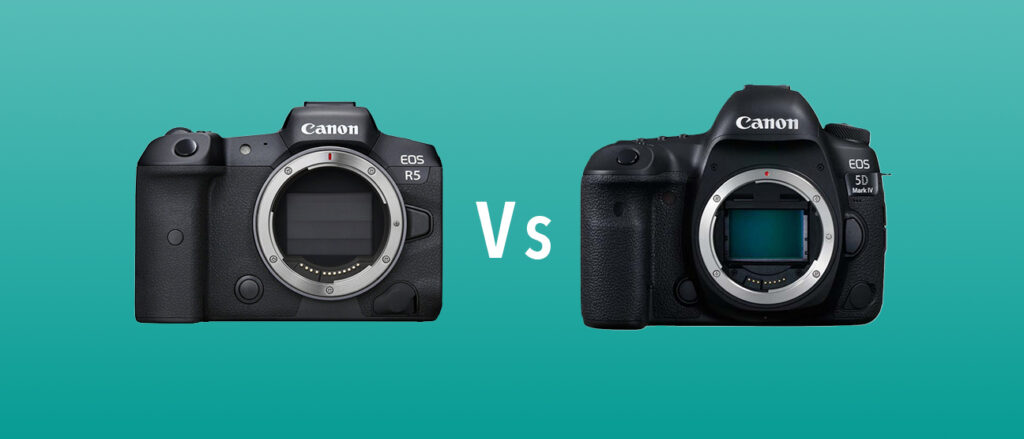
Mirrorless Vs DSLR. Both mirrorless cameras and DSLRs (digital single-lens reflex cameras) are popular among photographers, but they have key differences that impact everything from portability to image quality and user experience. Here’s a breakdown of the main differences:
1. Design and Mechanism
• DSLR: A DSLR has a mirror mechanism that reflects light from the lens up into an optical viewfinder. When you take a photo, the mirror flips up, allowing light to hit the sensor directly.
• Mirrorless: A mirrorless camera lacks this mirror mechanism, meaning light goes straight to the sensor, and the image is displayed on an electronic viewfinder (EVF) or LCD screen.
Effect: The absence of a mirror makes mirrorless cameras generally lighter and more compact than DSLRs, but also introduces the need for electronic viewfinders.
2. Viewfinder Type
• DSLR: Uses an optical viewfinder (OVF), which shows a real-time, true-to-life view through the lens without any lag.
• Mirrorless: Uses an electronic viewfinder (EVF) or simply displays on the LCD screen, meaning the view is a digital representation. Many high-end mirrorless EVFs now offer excellent resolution, but some users still prefer the clarity of an optical viewfinder.
Effect: EVFs offer useful overlays (e.g., histogram, exposure) and preview of exposure/white balance changes, but may experience slight lag or noise in low light. Optical viewfinders are instantaneous and may feel more natural to some users.
3. Autofocus Performance
• DSLR: Typically relies on phase-detection autofocus when using the optical viewfinder, which is fast and effective, especially for moving subjects. In live view (using the LCD), DSLRs often switch to contrast-detection, which can be slower.
• Mirrorless: Most mirrorless cameras use advanced phase-detection or hybrid AF systems directly on the sensor, resulting in very fast and accurate autofocus. This is especially true for recent mirrorless models, which have made big strides in AF speed and tracking.
Effect: For most modern cameras, mirrorless AF is now highly competitive with, and sometimes even superior to, DSLR AF. Mirrorless cameras often excel at eye-tracking AF, making them popular for portraits and action shots.
4. Size and Portability
• DSLR: The mirror and prism system make DSLRs larger and heavier, especially with full-frame models.
• Mirrorless: Generally more compact and lightweight, especially beneficial for travel and street photography.
Effect: Mirrorless cameras are often easier to carry, but this can also mean a reduction in battery life (smaller batteries) and sometimes fewer ergonomic features for a comfortable grip.
5. Battery Life
• DSLR: Typically has a longer battery life because the OVF doesn’t require power. You can take more shots on a single charge compared to most mirrorless cameras.
• Mirrorless: EVFs and LCD screens drain the battery more quickly, resulting in shorter battery life.
Effect: For long shoots or events where charging is limited, DSLRs may offer better endurance, while mirrorless users may need extra batteries on hand.
6. Image Stabilization
• DSLR: Generally relies on lens-based image stabilization, although some recent models incorporate in-body stabilization (IBIS).
• Mirrorless: Many mirrorless models now offer in-body image stabilization (IBIS), which works with any lens and can stabilize handheld shots more effectively.
Effect: Mirrorless cameras with IBIS can help achieve sharper images in low light or with slower shutter speeds, even with lenses that don’t have stabilization.
7. Continuous Shooting (Burst Mode)
• DSLR: Mechanical shutter speeds are often fast, but the mirror movement can limit how quickly photos can be taken in succession.
• Mirrorless: Mirrorless cameras often offer faster burst rates, especially in electronic shutter mode, since there’s no mirror movement to reset after each shot.
Effect: Mirrorless cameras often provide higher continuous shooting speeds, beneficial for capturing sports or wildlife.
8. Lens and Accessory Compatibility
• DSLR: Has a longer history and larger range of compatible lenses and accessories, particularly with established brands like Canon and Nikon.
• Mirrorless: Fewer native lens options, though this is rapidly changing as mirrorless systems mature. Adapters can often bridge this gap, allowing DSLR lenses to be used on mirrorless bodies.
Effect: If you already own a selection of DSLR lenses, you may prefer to stay with DSLRs or invest in adapters for mirrorless use.
9. Video Performance
• DSLR: Traditionally, DSLRs were not as optimized for video. Many have limitations like slower live view autofocus and shorter recording times.
• Mirrorless: Often designed with video in mind, offering features like 4K or even 6K/8K recording, excellent autofocus in video mode, and better video stabilization.
Effect: Mirrorless cameras generally have an edge in video capabilities, making them more versatile for hybrid photo-video use.
10. Image Quality
• Both: Image quality between DSLRs and mirrorless cameras is largely similar, as both can use the same sensors and processing technology.
Effect: There is minimal difference in image quality attributable solely to camera type; it’s more dependent on sensor size and quality, lens choice, and skill.
Summary of Pros and Cons
| Aspect | DSLR Advantages | Mirrorless Advantages |
| Size & Weight | Sturdier, ergonomic build | Compact, lightweight |
| Viewfinder | Optical (true-to-life view) | Electronic (preview settings & overlays) |
| Battery Life | Generally longer | Shorter but improving |
| Autofocus | Excellent in OVF mode | Fast, accurate, advanced tracking |
| Lens Options | Wider selection | Fewer options but growing over time |
| Continuous Shooting | Fast but mechanically limited | Often faster with electronic shutter |
| Video Performance | Sufficient, but limited | Advanced features, stabilisation |
| Image Stabilisation | Lens-based | Lens-based and more models with in-body |
Mirrorless Vs DSLR, Which to Choose?
• DSLR: If you prioritize battery life, optical viewfinder, and have existing DSLR lenses, a DSLR may still be a great choice.
• Mirrorless: If you want a lightweight setup, fast and advanced autofocus, better video capabilities, and don’t mind the electronic viewfinder, mirrorless cameras offer excellent benefits.
Overall, many professionals and enthusiasts are moving toward mirrorless due to its versatility and the rapid technological advances in recent models, but DSLRs still offer advantages for specific needs and preferences.

Author: Peak District Focus
Peak District Focus Webmaster


